Featured Image: Erin Spong
There's car camping and backcountry camping, but winter camping is a whole other beast. Combining the skills and gear needed for both sleeping and skiing in the snowy backcountry, winter camping comes with its own set of nuances that you wouldn't normally think of in a summertime backpacking scenario. I was lucky enough to go on my first winter camping mission with two friends, Nat Segal and Leah Evans, who happen to be professional skiers, hiking guides, and winter camping aficionados. I learned a lot from these ladies and now I want to pass that wisdom on to anyone who is curious about winter camping. Keep reading for Nat and Leah's top 10 tips for a more comfortable winter camping experience, below.
1. Think About Your Timing
Try a single overnight adventure for your first time. This reduces the commitment to the weight you need to carry and the time you spend in discomfort. Spring is also a great time to try winter camping for the first time, as the weather is generally more inviting, with warmer temperatures and longer days.
2. Size Matters
The right-sized pack can make or break a trip. If your pack is too small, you won't have enough space for all of the essentials, but if your pack is too big, you'll end up carrying more than you need. For a single overnight effort, I found a 50L pack to be just the right size for carrying all of my food, water and gear.


Left Photo: Erin Spong | Right Photo: Leah Evans
3. Sharing is Caring
Share resources with your partners. Splitting tents, stoves and meals across the crew helps lighten the load for everyone. You can only go as far as you can carry your pack.
4. One Set for Skiing, One Set for Sleeping
Ski touring with a heavy pack inevitably makes you sweaty. Packing a second set of socks and base layers for sleeping and hanging at camp keeps you safely warm and gives your sweaty ski layers a chance to dry overnight.
5. Start Digging
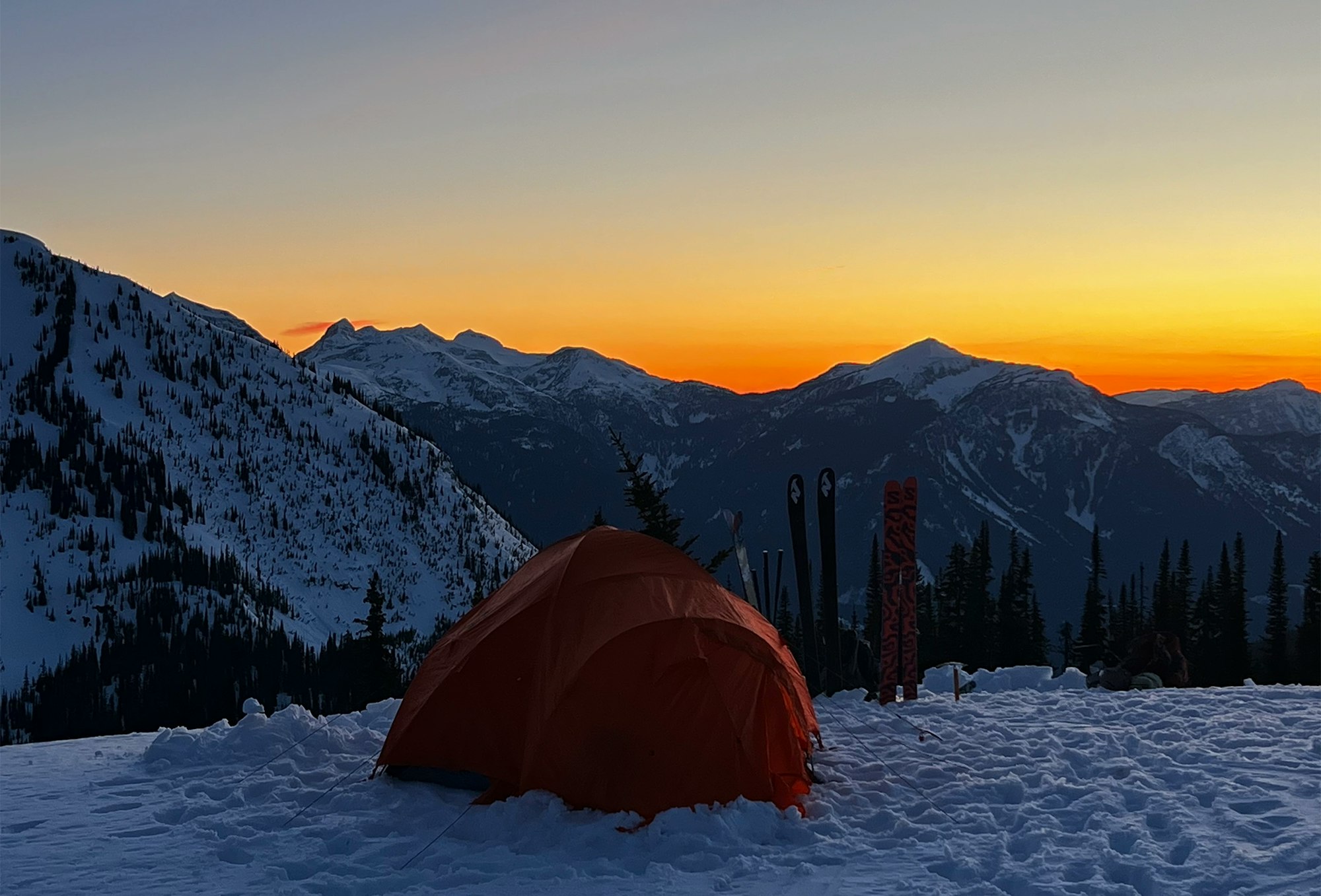
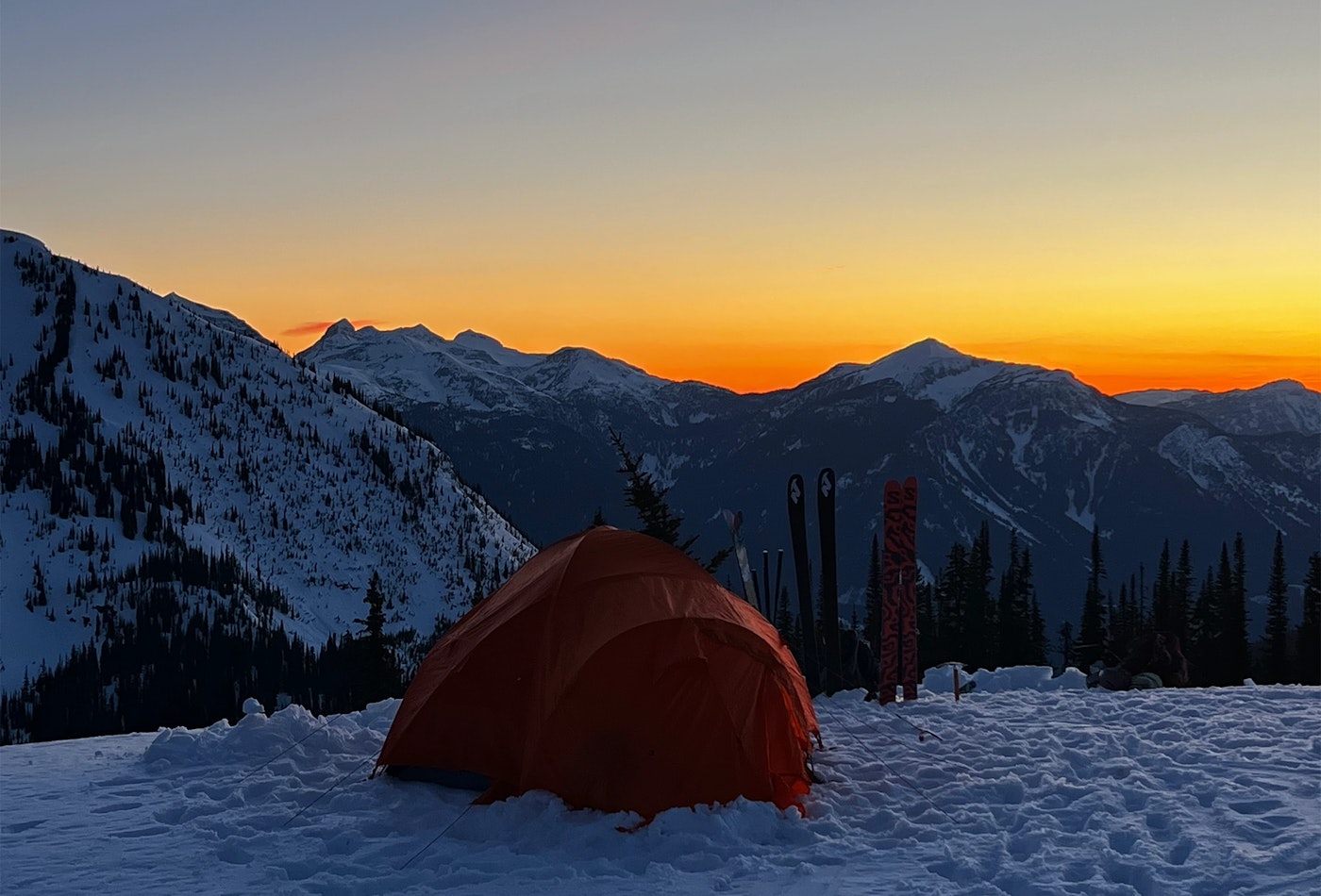
As soon as you find a safe spot to set up camp, out of avalanche paths and overhead hazards, it's time to build a sleeping platform and a separate cooking area. Stomp out a flat platform for your tent, then dig a step-down from your tent door for easy in and out. Separate from your sleeping area, dig out a kitchen with a bench to sit on, a bench to cook on and foot space between the two benches.

Photo: Erin Spong
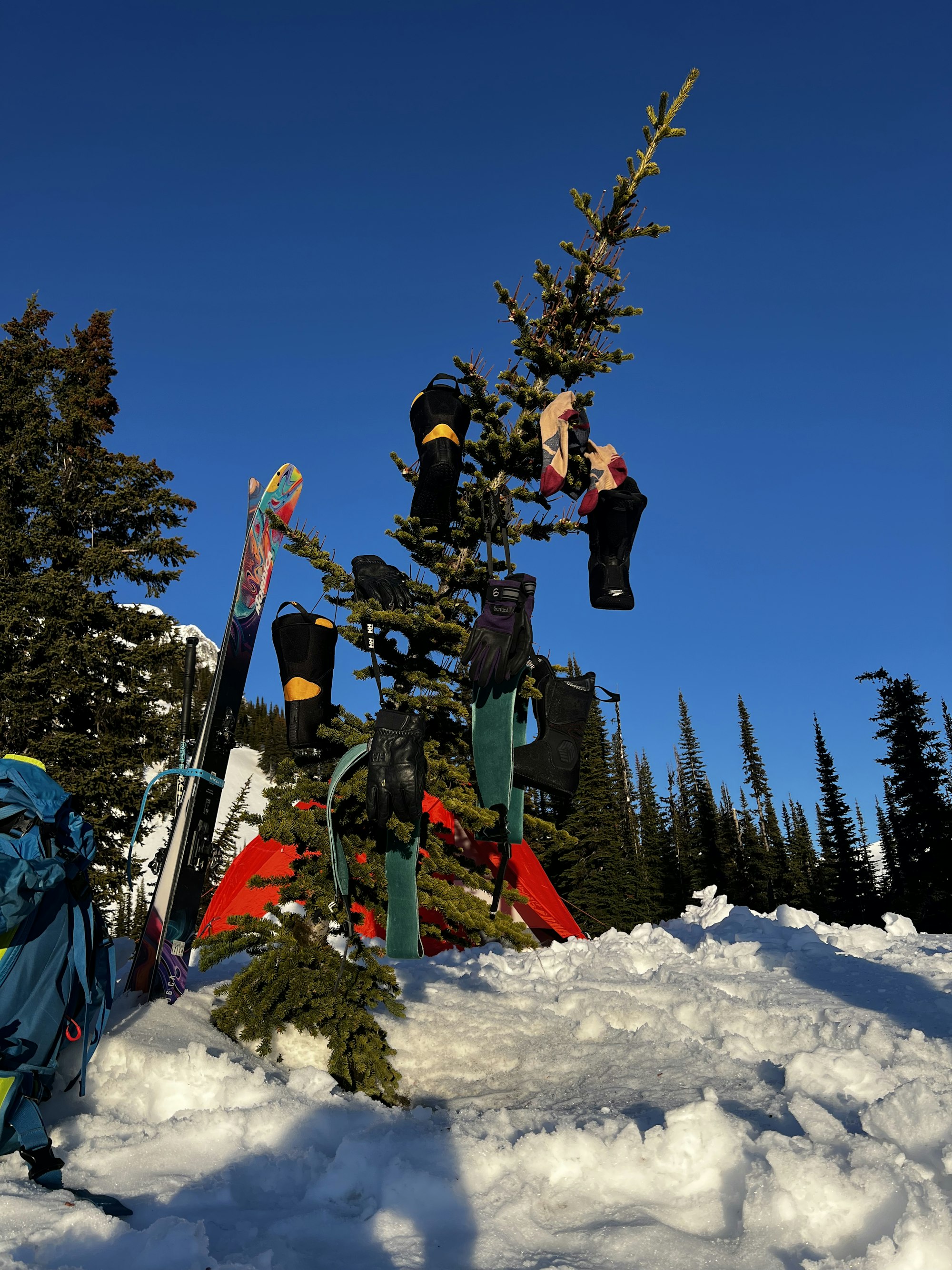
Photo: Erin Spong
6. Hang it Out to Dry
Drying gear outside in the snow can be tricky. Hang dry what you can in the sun while you still have daylight and then anything that's still wet should go in your sleeping bag with you, including your boot liners. Your body heat inside the sleeping bag will help dry your gear overnight while you sleep.
7. Sleep on it
For the items that don't fit in your sleeping bag, like your ski outerwear and skins, simply place them between your sleeping bag and sleeping pad to use your body heat as an overnight dryer.
8. Insulate Your Sleeping Quarters
While a sleeping pad and bag are enough for summer backpacking, winter camping requires an insulating layer between the snow and your sleeping pad. Whether that's a foldable foam pad, a mylar blanket or something else, is up to you and what you have available or space for.

Photo: Nat Segal
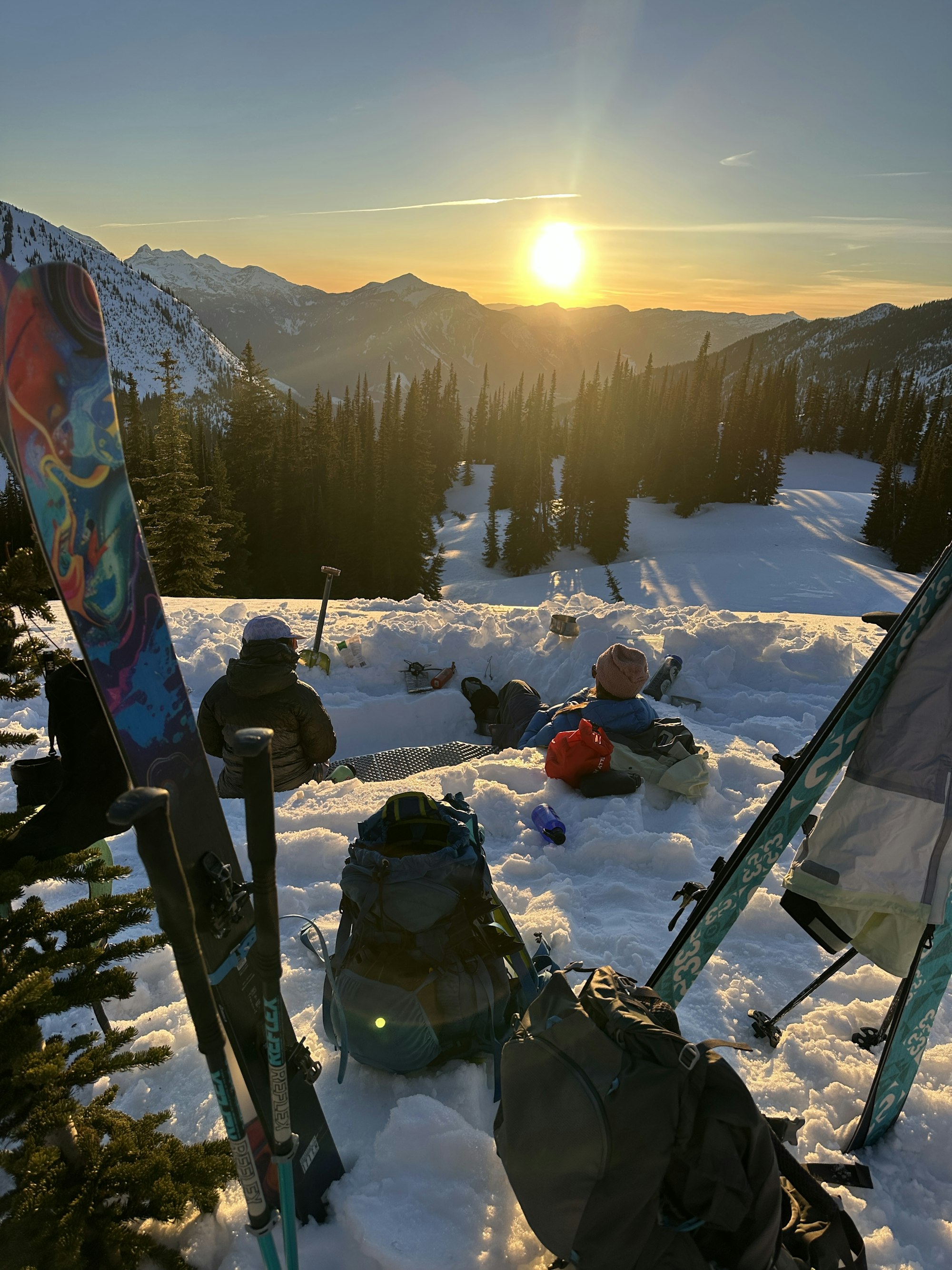
Photo: Nat Segal
9. Water is Life
You can only do as much as you have water for, and melting snow takes up the majority of your time around camp. Jetboils are great for melting water for yourself if it's not dreadfully cold, but if you have more than two people in your crew, you're traveling to high elevations, or it's well below freezing, a liquid fuel stove like the MSR Whisperlite is your best bet. It's more efficient in burning fuel and melts snow faster than an average Jetboil.
10. Save Water, Use Snow
Washing dishes with snow helps conserve precious water for drinking and cooking. Simply scrub your dishes with snow and ice, and then bury the dirty snow to prevent attracting critters around your campsite.